Igor Finkelshtein: Why Local Transportation Operators Outcompete National Giants
When WNY Bus Co. faced a challenge to its school district contract from a large national transportation operator, the instinct from the outside might have been to assume the bigger company would win. National firms have legal departments, lobbyists, capital reserves, and brand recognition that local operators simply can’t match on paper.
But we won.
Not because we outspent them. Not because we had more lawyers. We won because we had something they couldn’t manufacture: a decade of relationships, a local workforce that lives in the same neighborhoods as the families we serve, and an operational track record built mile by mile in Western New York.
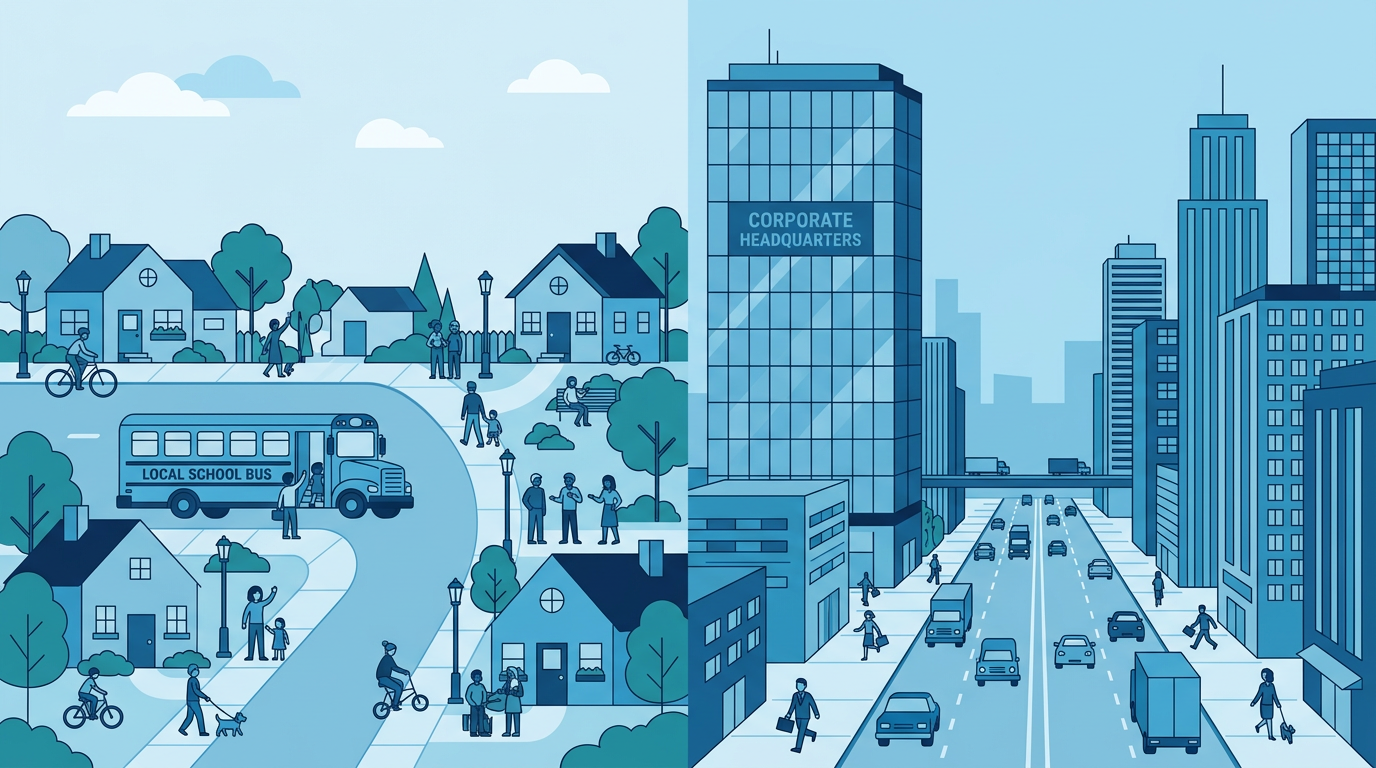
That experience taught me something I’ve carried into every business I’ve built since. When it comes to essential services – transportation, healthcare logistics, community infrastructure – local operators have structural advantages that national companies spend millions trying to replicate and usually can’t.
The Accountability Gap
Large national transportation companies operate on a model of standardization. That’s their strength at scale, but it’s also their most significant weakness at the local level.
When something goes wrong – a missed pickup, a route delay, a driver shortage during a snowstorm – a national company’s response flows through layers of regional management, call centers, and escalation protocols. By the time someone with actual decision-making authority is involved, the situation has already deteriorated.
At WNY Bus Co., I can be reached directly. My operations managers are in the community. When a brutal winter hits Buffalo, and roads are dangerous, we’re not waiting for a corporate safety policy memo from headquarters – we’re making real-time calls based on local knowledge, because our drivers grew up here and our dispatchers know these streets.
That accountability is invisible on a bid sheet. But parents, school administrators, and district transportation directors feel it every single day.
Local Knowledge Is a Technical Advantage
There’s a tendency in the business world to think of “local knowledge” as a soft, unmeasurable quality – something nice to mention in a press release but not a genuine operational differentiator. I disagree completely.
In transportation, local knowledge is a technical advantage with a direct impact on cost and performance.
Consider routing. A national company deploying software-optimized routes in Western New York is working from data. A local operator is working from data plus twenty years of understanding which roads flood in spring, which school pickup zones have visibility problems in December, and which neighborhoods have parking patterns that shift the effective pickup window by four minutes every day.
That granular knowledge doesn’t just make routes safer. It makes them faster and cheaper. It reduces idle time, fuel consumption, and driver hours. It lowers the complaint rate from parents because the system behaves predictably in ways that match lived reality.
This is why, across the transportation industry, local and regional operators consistently outperform national companies on service quality metrics when they’re given a fair contracting process.
What I’ve Built Across Industries Reflects the Same Principle
Transportation is where this lesson was most visible for me, but it isn’t the only place I’ve seen it play out.
Across my work in real estate, technology, and healthcare logistics, the pattern is consistent: the operators closest to the customer, the community, and the day-to-day operational reality are the ones who build durable businesses. The companies that last aren’t the ones with the largest marketing budgets – they’re the ones where the founder or the operator is still genuinely connected to what the business does.
I’ve seen this same inside-out approach work in transportation technology as well. Software built for dispatchers, drivers, and operations managers has to reflect what actually happens at 6:00 AM when a bus is running late – not what looks elegant in a product demo. The best transportation tech tools I’ve encountered were built by people who had already run operations themselves, not by engineers studying the market from a distance.
The Contract Win Was About Trust, Not Price
When WNY Bus Co. defended its contract, the deciding factors weren’t purely financial. School district administrators and board members were evaluating a long-term relationship. They were asking: Who do we trust to transport our children safely every day for the next several years?
That question has an answer that’s built over time. It’s built through consistent performance, showing up in difficult conditions, and being a visible, accountable presence in the community. It can’t be assembled in a bid document by a company that entered the market six months ago.
This is the business lesson I keep returning to: the best competitive moat isn’t capital or technology. It’s trust that has been earned at scale over time, in a specific place, with specific people.
National companies can buy routes. They can’t buy that.
What This Means for the Industry Going Forward
The transportation sector is changing rapidly. AI-powered routing, real-time tracking, predictive maintenance, and integrated mobility platforms are reshaping how fleets operate. I’m actively involved in that evolution, and I believe these tools will fundamentally improve what local operators can deliver.
But technology amplifies the operator behind it. The local company with deep community relationships that adopts smart routing software becomes dramatically more efficient. The national company deploying the same software in a market it doesn’t understand gains less, because the baseline is weaker.
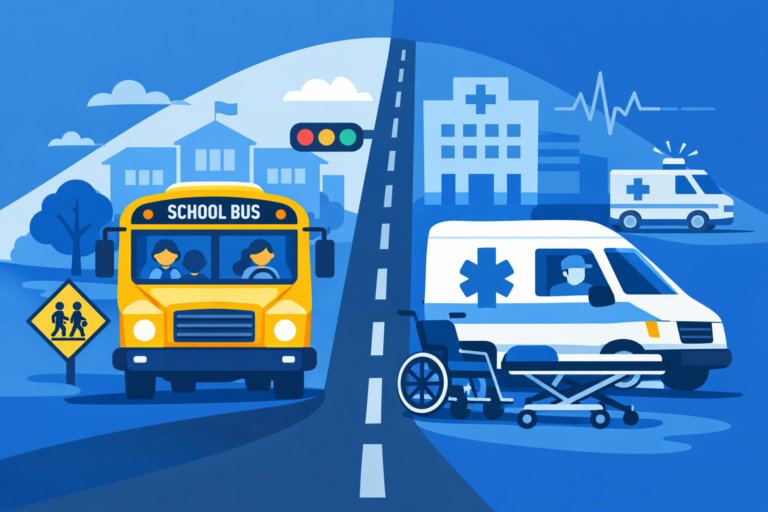
The future of transportation – particularly in school districts, NEMT, and paratransit – belongs to operators who combine local trust with smart systems. That’s the combination I’ve been building toward for the past decade, and the WNY Bus Co. contract victory was one of the clearest validations that this approach works.
Local isn’t a limitation. It’s a strategy.